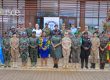

Uganda is hosting a three-day Open Source Intelligence (OSINT) and Conflict Analysis Training to strengthen regional capacity to anticipate, prevent, and respond to emerging security threats. The training has brought together representatives from Uganda, Sudan, Somalia, Kenya, Ethiopia, Comoros, Burundi, as well as regional and continental bodies including IGAD, African Union, COMESA, ECOWAS, and the Eastern Africa Standby Force (EASF).

During the opening of the training, in Kampala, the Deputy Chief of Defence Intelligence and Security Brigadier General Abdul Rugumayo, who represented the Chief of Joint Staff encouraged the sharing of ideas in a way that benefits the wider regional community.
He noted that timely and coordinated intelligence is critical for early warning and conflict mitigation.
“It is no longer practical to operate in silos. We must analyse information collectively to improve decision-making in situation rooms,” he added.
He highlighted Uganda’s regional engagement under the African Union and Regional Economic Communities, noting that misinformation and lack of timely intelligence have sometimes prolonged conflicts.

Brigadier General Domitien Kabisa, Head of Peace Operations at the EASF Secretariat, said the training represents a milestone in regional efforts to strengthen conflict detection and response.
“The training reflects EASF’s commitment to operationalise the African Union’s conflict prevention framework and to strengthen the analytical core of the region’s early warning systems.”

The African Union’s representative, Ms Orit Ibrahim, Situation Room Coordinator of the AU Continental Early Warning System, highlighted the importance of OSINT in addressing multidimensional security challenges, from cross-border insurgencies to climate-induced insecurity and information manipulation.
Ms Ibrahim commended the leadership of the EASF Peace Operations Department and the active participation of national early warning focal points and regional organisations, noting that their collaboration embodies African solutions to African problems.
The three-day training focuses on three key objectives: developing practical skills in open-source verification and geolocation, fostering trust and interoperability among early warning units across AU, RECs, and EASF, and integrating OSINT into early warning workflows, including horizon scanning, misinformation tracking, and situation room alerts.