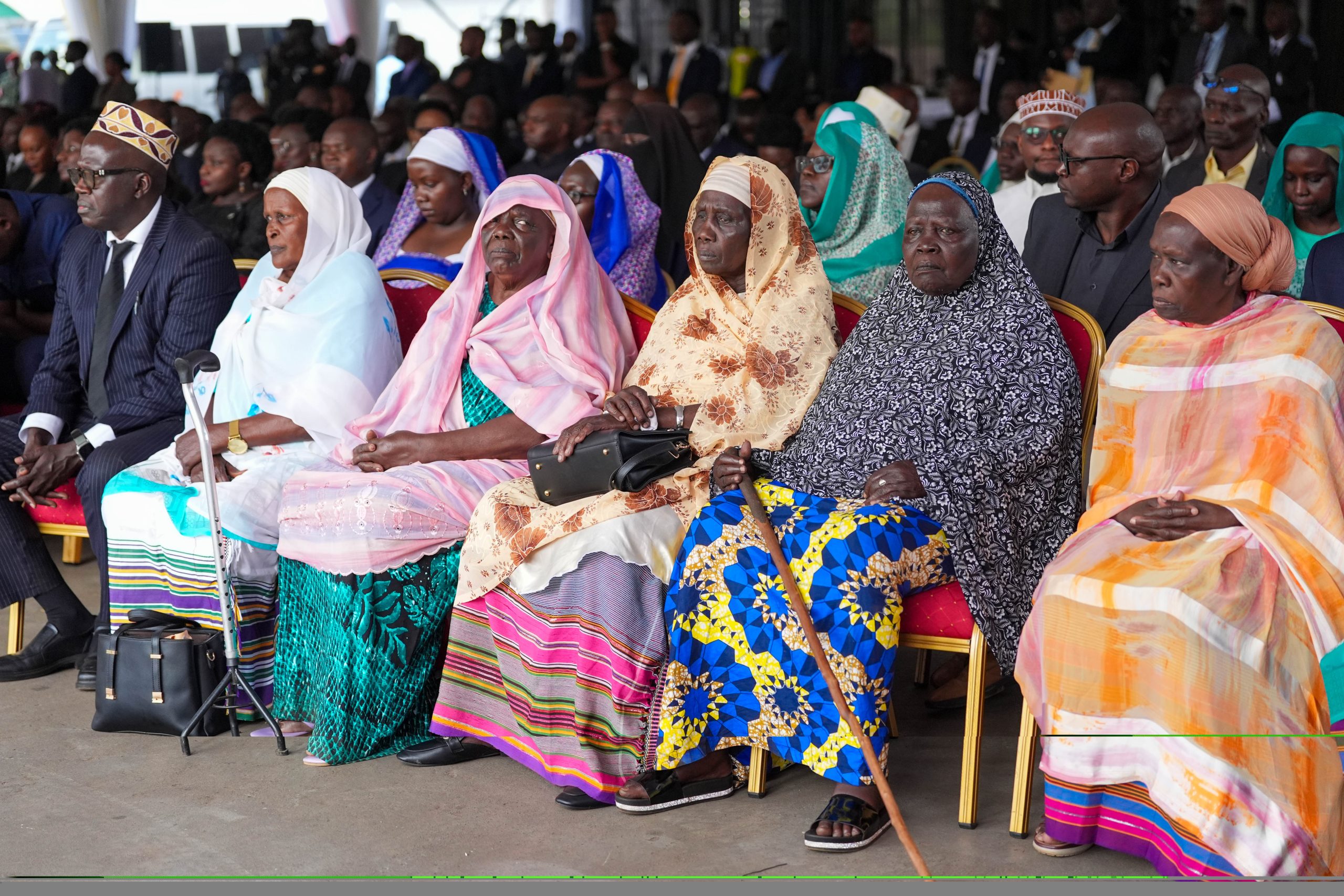
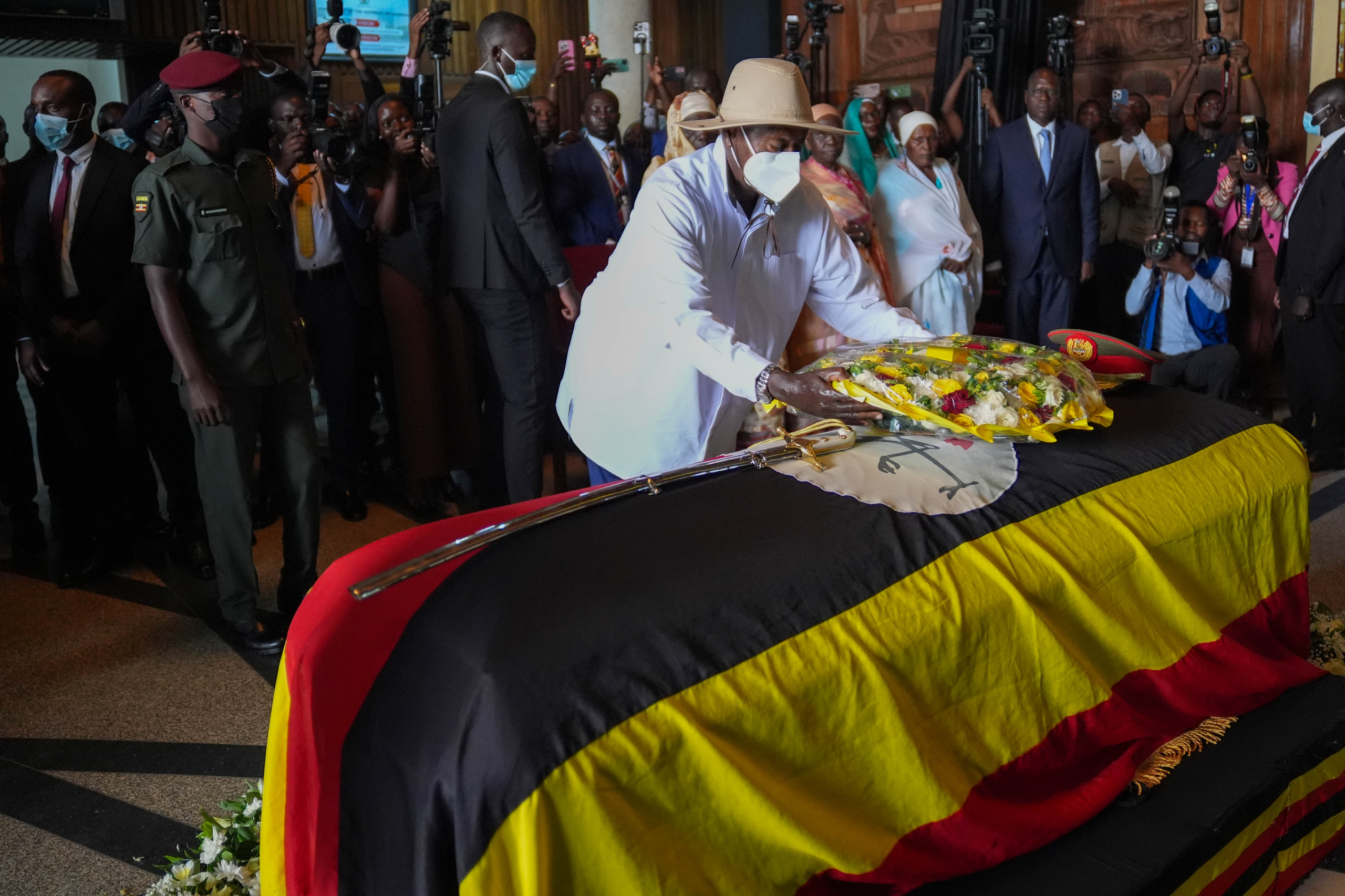
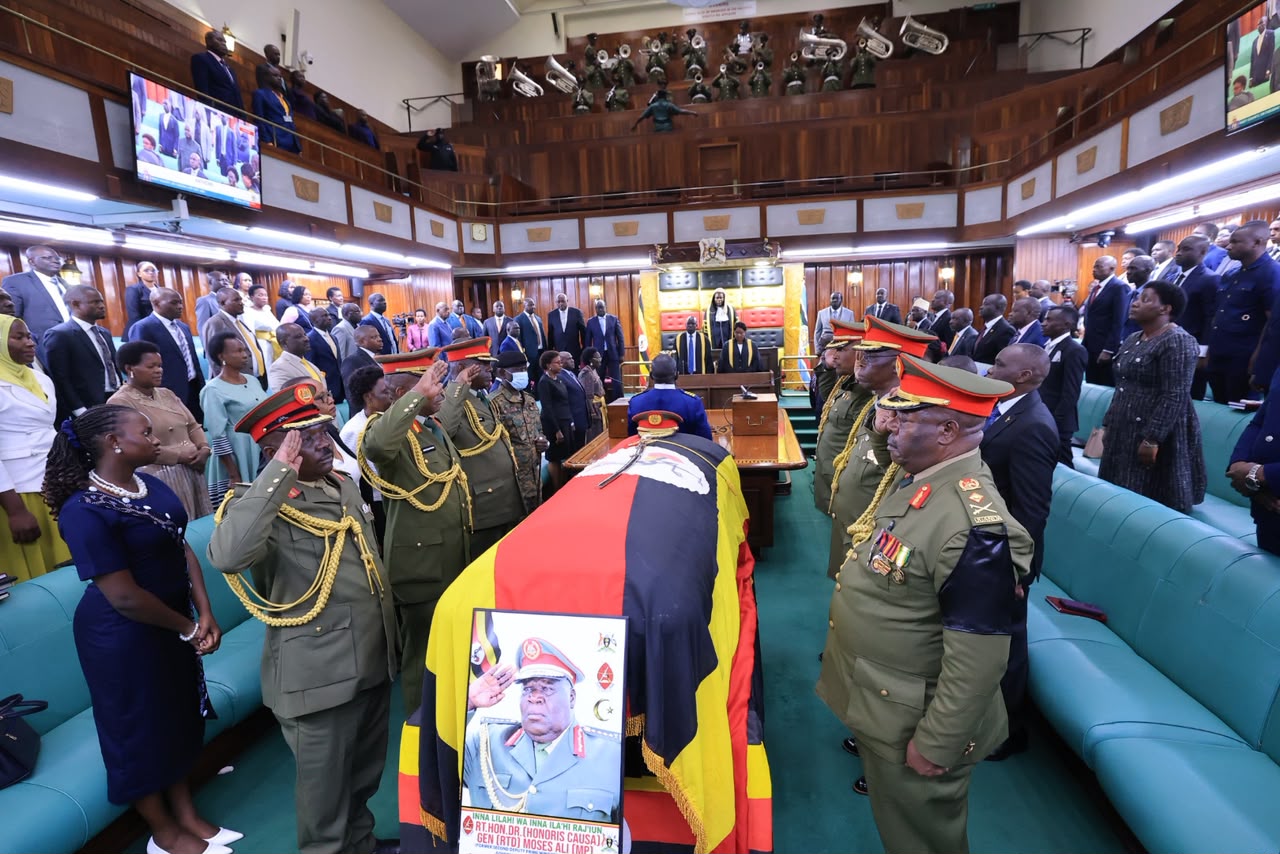
 The President of the Republic of Uganda and Commander-in-Chief of the Uganda Peoples’ Defence Forces His Excellency Gen (Rtd) Yoweri Kaguta Museveni has paid tribute to the late Gen (Rtd) Moses Ali, describing the former Second Deputy Prime Minister and Adjumani West Member of Parliament as a steadfast patriot whose legacy was defined by the pursuit of freedom, a commitment to peace, and unwavering dedication to the development of the West Nile region.
Speaking during a special parliamentary sitting convened to honour the veteran legislator, who passed away on July 18, 2026, President Museveni said Gen Ali would be remembered as a freedom fighter, peacemaker, and development-oriented leader.
“I came here to bear witness to the positive attributes I saw in General Moses Ali. He was a freedom fighter, a peacemaker and a development-oriented leader. That is how I will remember him,” President Museveni said.
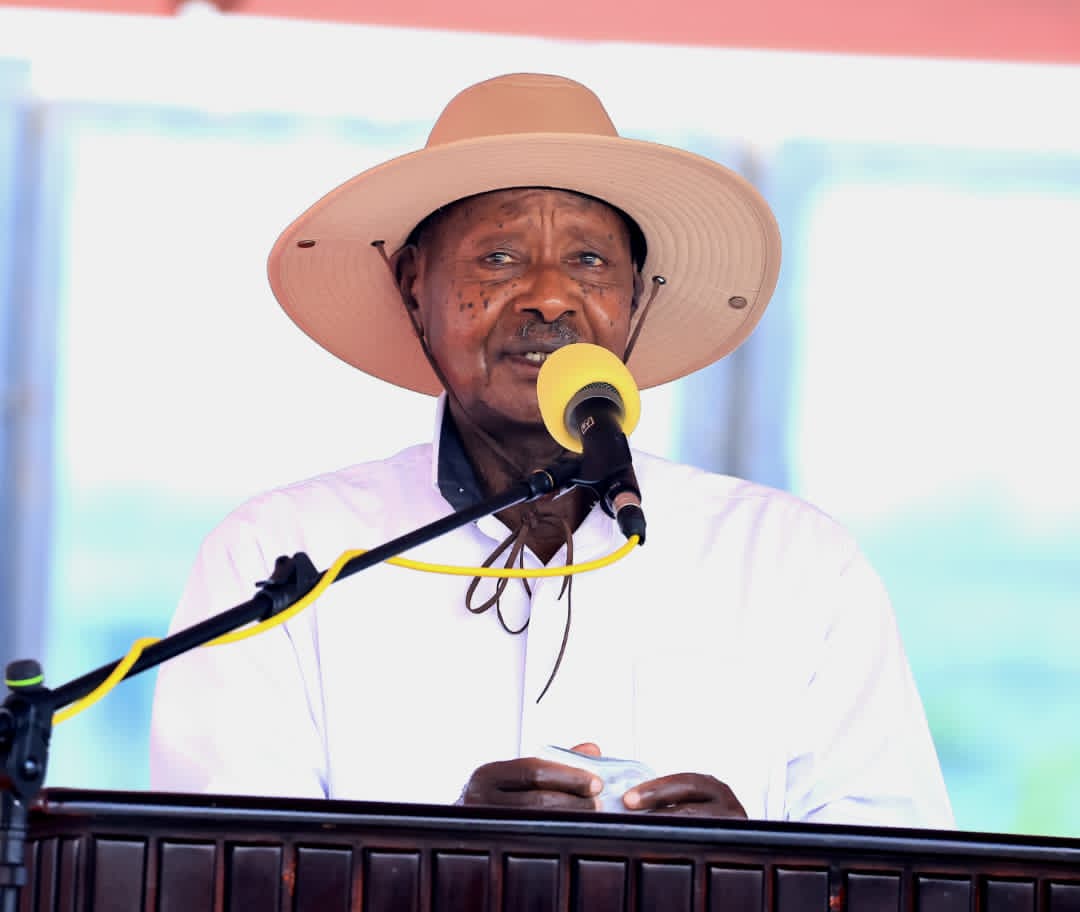
The President recalled that although Gen Ali had served in the Idi Amin government following the 1971 coup, he became disappointed by the widespread killings and human rights abuses committed during the regime and quietly opposed its actions.
“I came to know him as a lover of freedom. Although he had been with Idi Amin after the 1971 coup, he was not happy with the killings that were taking place. That is why he had been dismissed,” he said.
President Museveni also recounted his first meeting with Gen Ali in Libya in 1981 during a meeting convened by the late Libyan leader Muammar Gaddafi, where the two leaders agreed to coordinate their efforts against the government at the time.
“So that’s how I met Moses Ali for the first time, and you could see he wanted cooperation,” the President said. “We agreed to coordinate and not to merge. They did not fight us when we were entering Kampala, and that is how our cooperation started.”
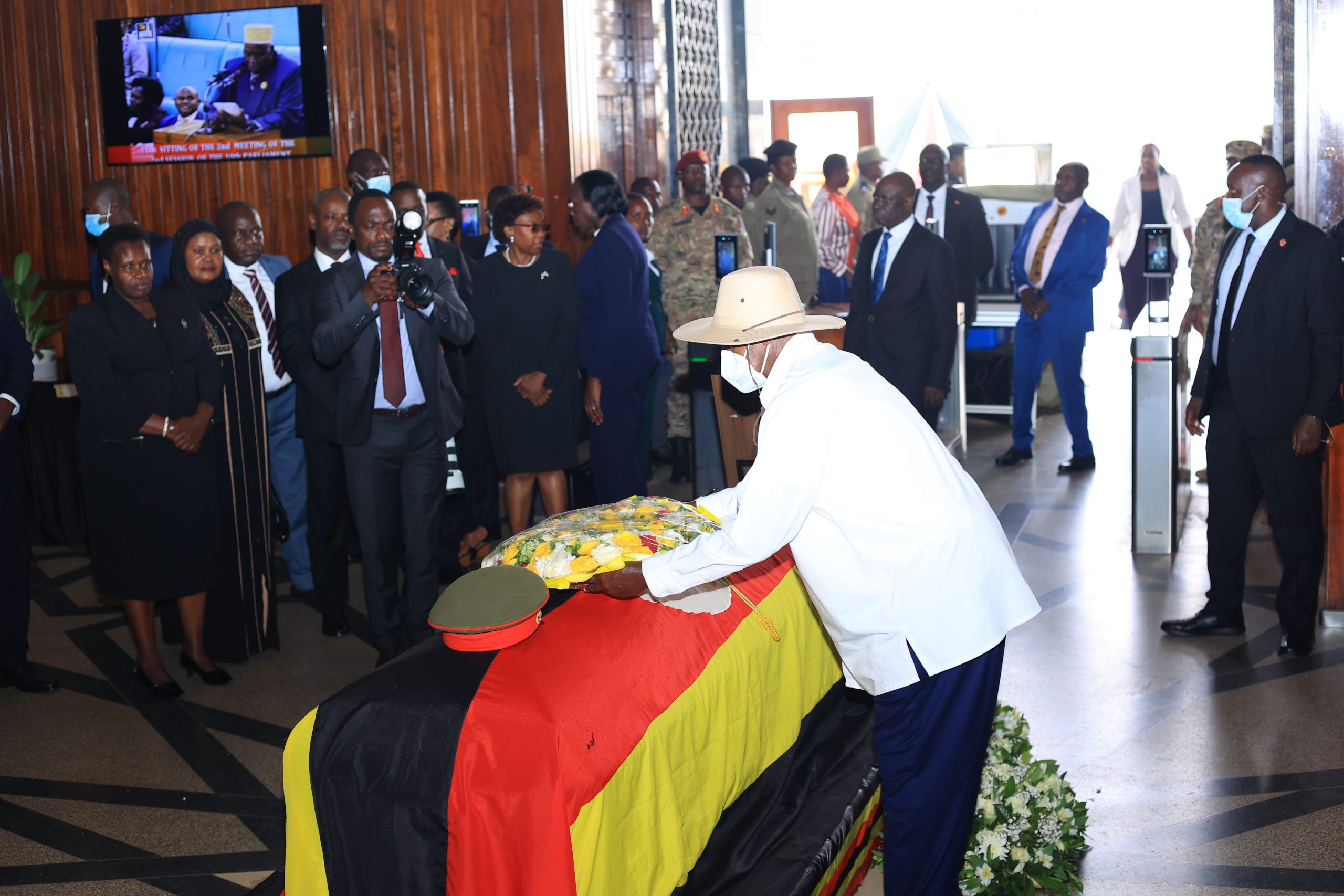
The President commended Gen Ali for his relentless advocacy for the development of West Nile, noting that his persistent lobbying had contributed to major infrastructure improvements, including roads, electricity, and support for war veterans.
“He was always at the forefront. Many of his pressures on us already brought results. Electricity is now linked, the roads are now tarmacked, and there are other ongoing road projects,” President Museveni said.
He, however, urged leaders from the region to complement infrastructure development by promoting wealth creation and improving household incomes through productive economic activities.
“People do not sleep on roads; they sleep in their homes. Infrastructure is important, but household incomes are equally important. We need new enterprises to transform livelihoods,” he said.
Reflecting on Uganda’s political history, President Museveni said he and his colleagues resolved to oppose Idi Amin immediately after the 1971 coup through armed struggle. He also criticised the Uganda People’s Congress (UPC), accusing its leaders of pursuing revenge against civilians in West Nile following Amin’s overthrow.
“The particular mistake that affected the country later was revenge. We had started a conflict with the UPC because I was the first man in the whole of Uganda to oppose Idi Amin,” he said.
According to the President, the violence that followed displaced hundreds of thousands of Ugandans, particularly from West Nile, forcing many to seek refuge in the neighbouring Democratic Republic of Congo and South Sudan.
“Those mistakes created one of the biggest refugee crises Uganda had ever experienced. Many of these young people here, who are with us in Parliament, were born in Congo or South Sudan,” he noted.
President Museveni further revealed that he appealed to the Tanzanian forces that remained in Uganda after Amin’s overthrow to prevent retaliatory attacks against the people of West Nile, whom he said had welcomed the liberation forces.
“We talked with the Tanzanians and asked them not to allow these confused people to kill West Nilers because the people of West Nile did not run away. They waited for us; they received us,” he said.
He added that following the withdrawal of the Tanzanian forces, renewed violence in West Nile forced more residents into exile.
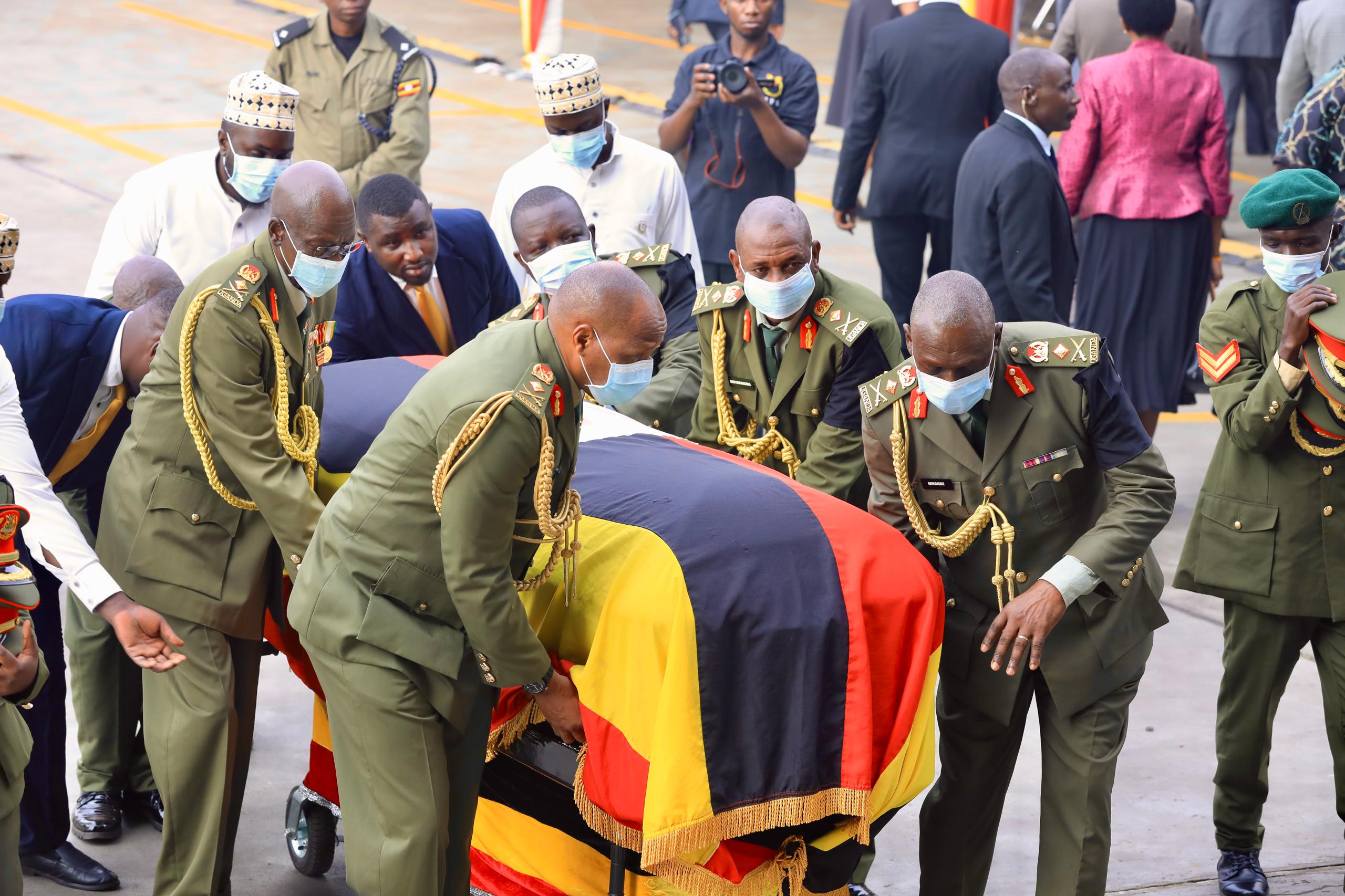
Gen (Rtd) Moses Ali, widely known as the “Lion of Adjumani,” was born on April 5, 1939, in Adjumani District. He joined the Uganda Army in 1962 and was commissioned as a Second Lieutenant in 1969, rising through the ranks while serving in the Idi Amin government, where he held senior positions including Minister of Finance and Minister of Internal Affairs.
Following the collapse of the Amin regime in 1979, he fled into exile before returning to lead the Uganda National Rescue Front (UNRF) rebel group. He later reconciled with President Museveni’s government and became one of Uganda’s longest-serving senior leaders, representing Adjumani West in Parliament and serving in several Cabinet positions, including First Deputy Prime Minister and later Second Deputy Prime Minister. He passed away on July 18, 2026, at the age of 87.