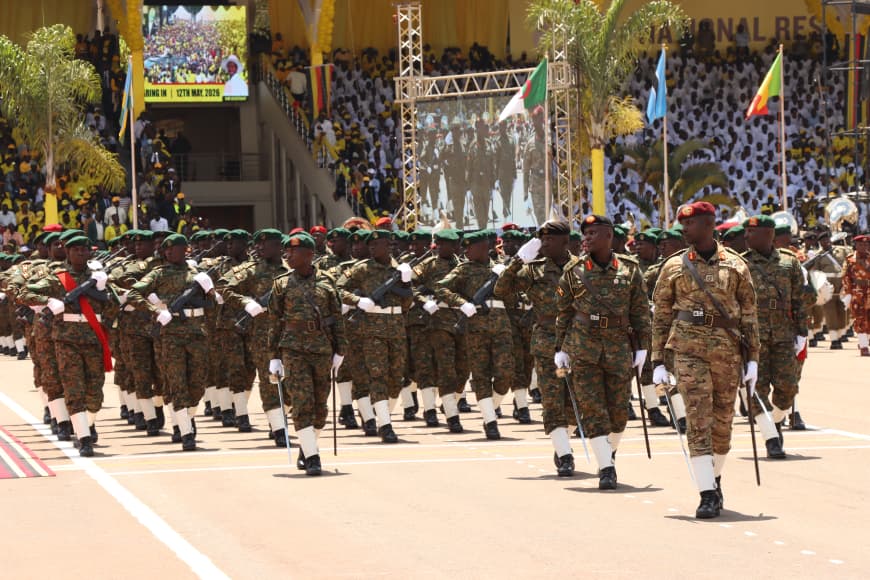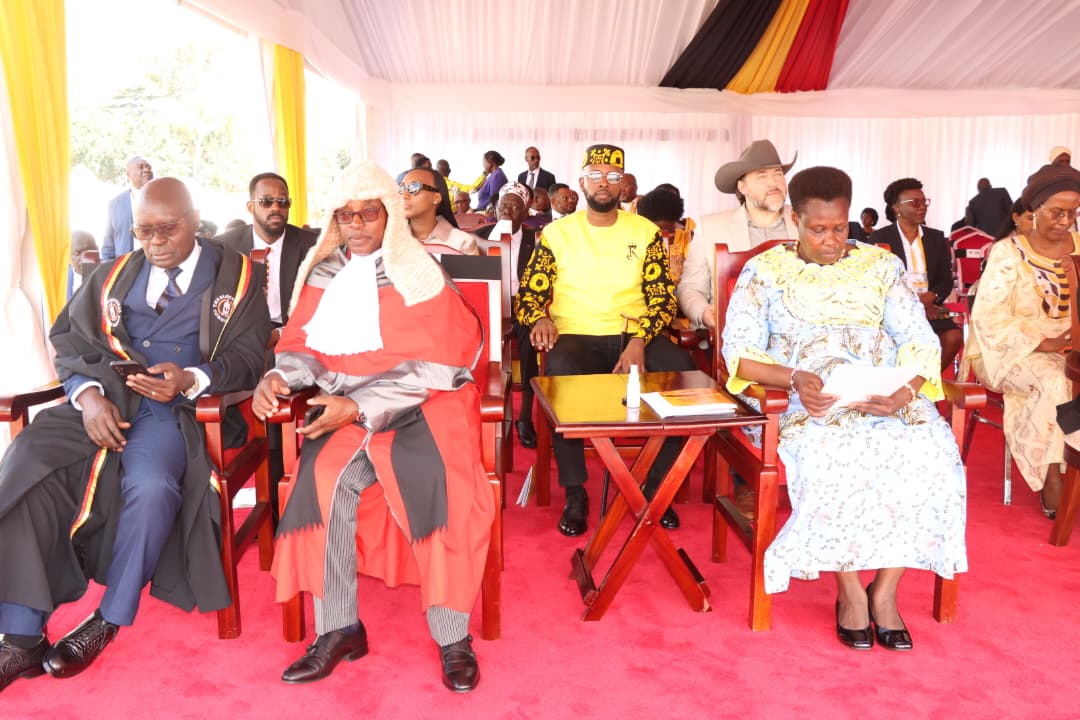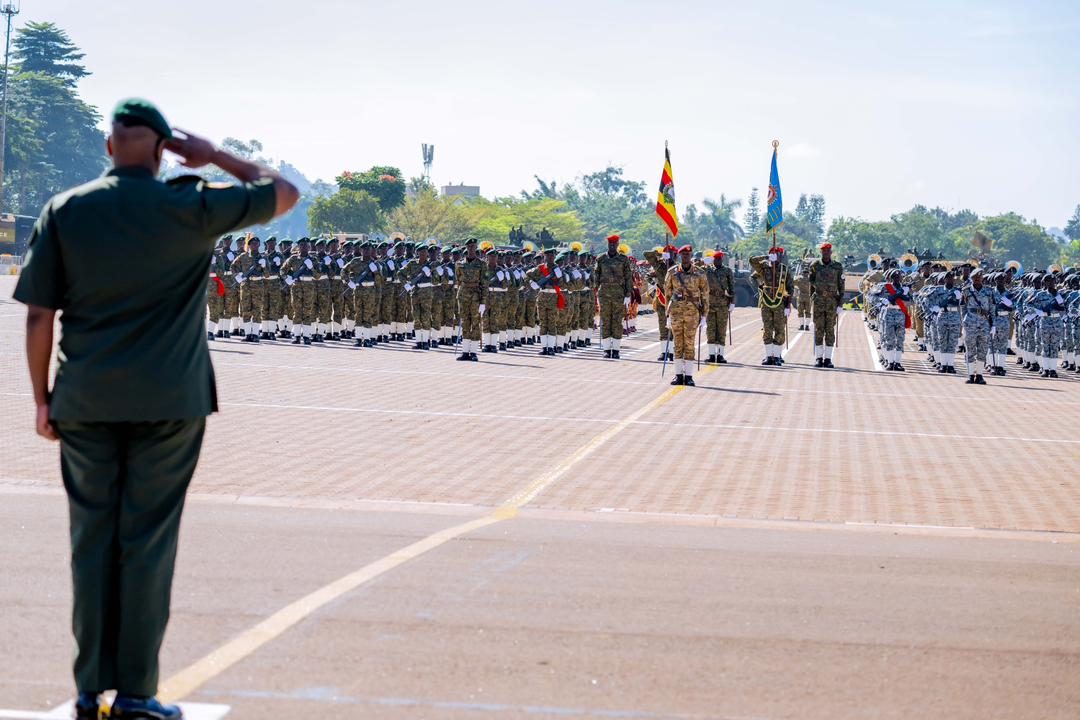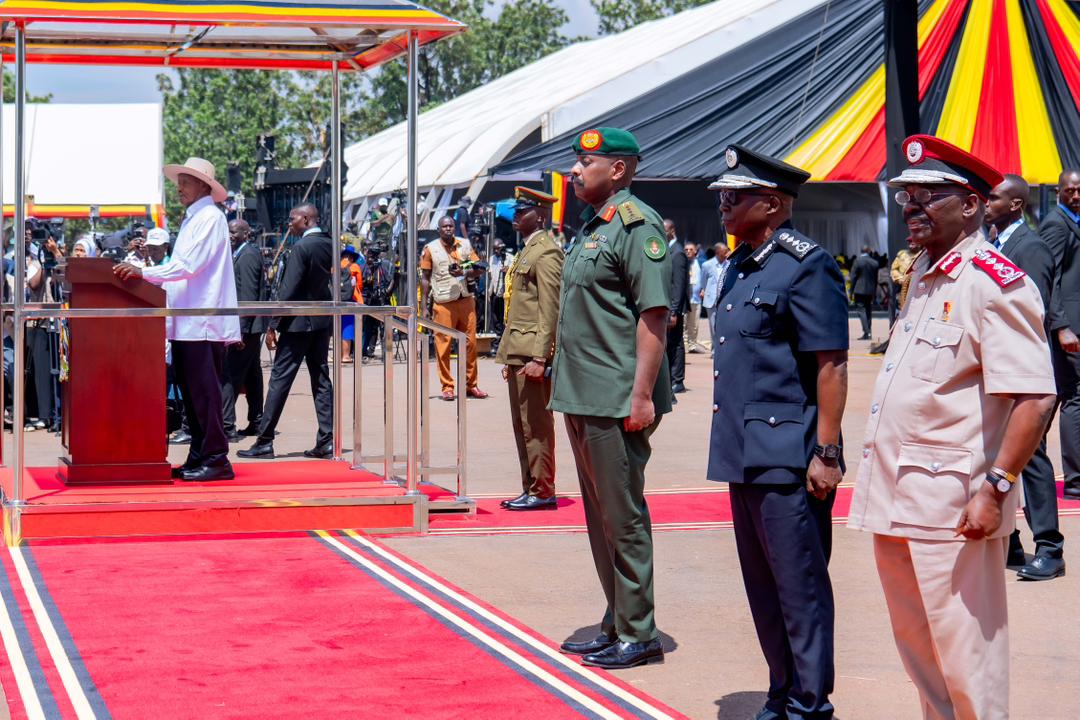
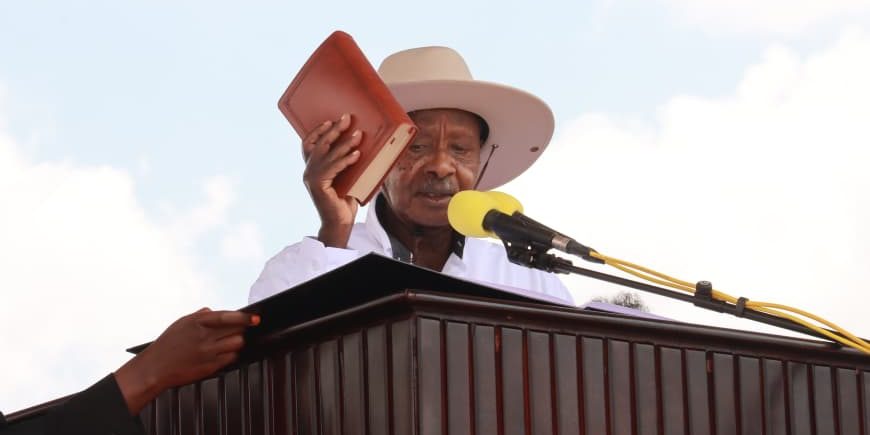
Uganda marked the official commencement of the 2026–2031 term of office on Tuesday at the swearing-in and inauguration of the President-elect and Commander-in-Chief of the Uganda People’s Defence Forces, H.E. Gen (Rtd) Yoweri Kaguta Museveni, held at Kololo Independence Ceremonial Grounds in Kampala.
The ceremony was conducted under the theme: “Protecting the Gains as We Make a Qualitative Leap to Higher Middle-Income Status”. Thousands of citizens, many dressed in yellow shirts and waving flags, gathered to witness the historic national event.
Oath and Instruments of Power
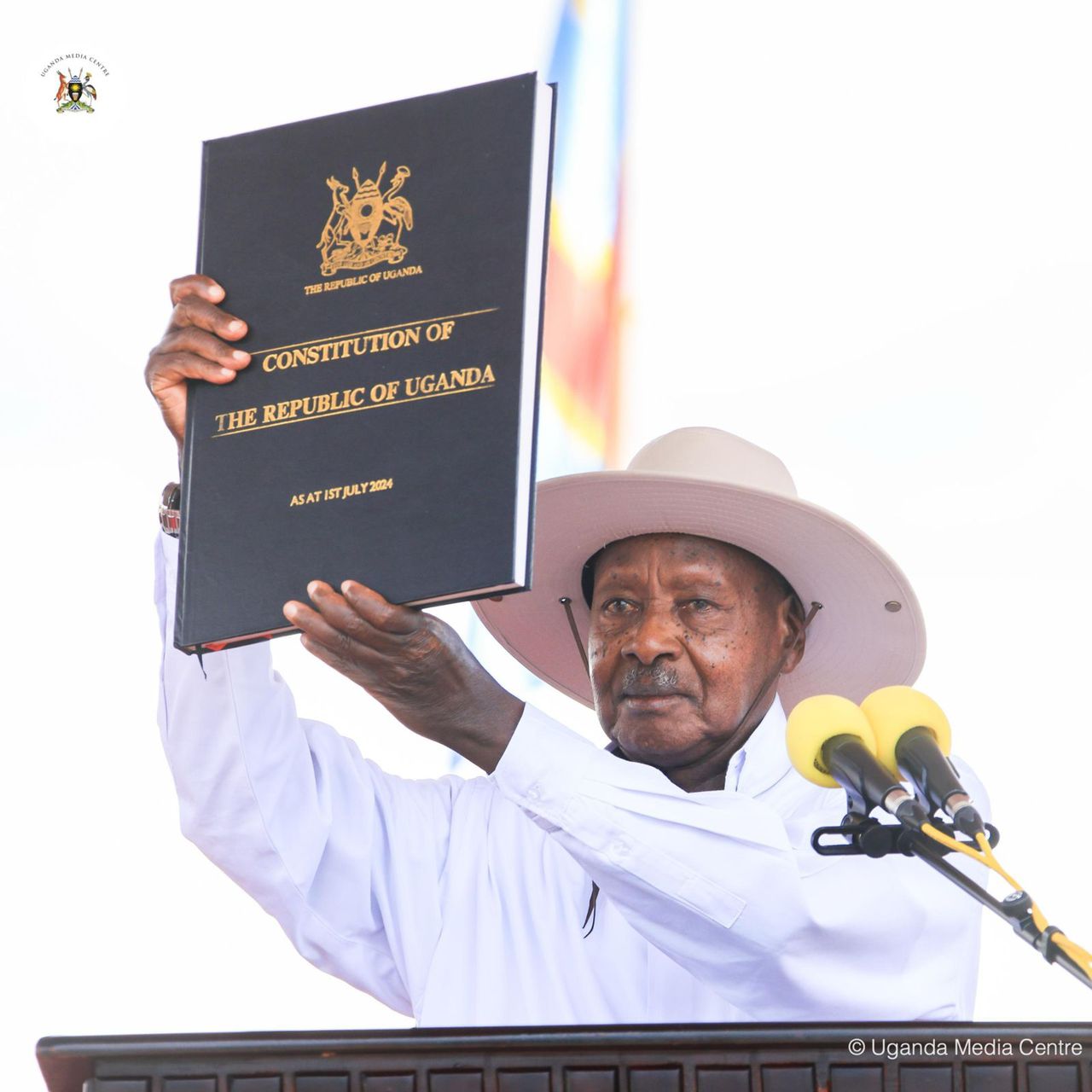
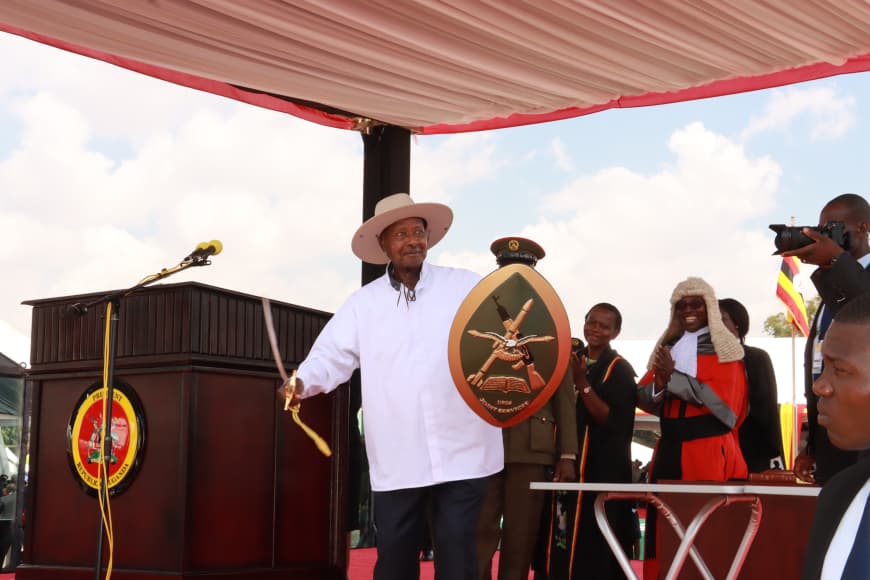
Chief Justice Dr Flavian Zeija administered the oath of office to President Museveni. Following the oath-taking, the President was presented with the instruments of power of the Republic of Uganda, symbolising the authority and sovereignty entrusted to the Head of State. These included the Constitution of the Republic of Uganda, the National Flag, the Presidential Standard Flag, the National Anthem, the National Coat of Arms, and the Public Seal.
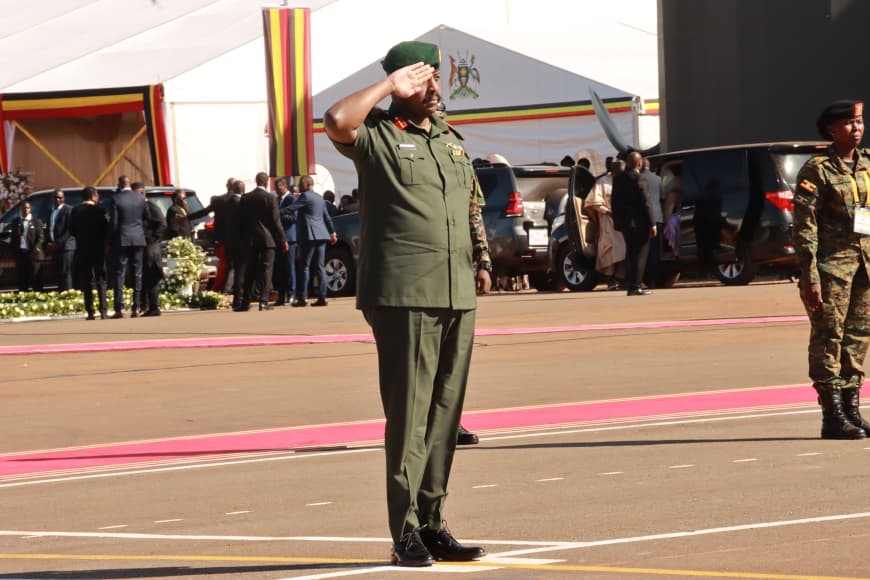
In recognition of his assumption of office, President Museveni was accorded a Presidential Salute accompanied by a 21-gun salute, a traditional military honour signifying respect and the formal assumption of leadership as Commander-in-Chief of the Uganda Peoples’ Defence Forces (UPDF).
Tribute to Neighbouring States
In his inaugural address, President Museveni paid tribute to the people and leadership of Tanzania for the critical role they played during Uganda’s liberation struggle and periods of instability.
“On this occasion, I want to thank the people of Tanzania, especially Mwalimu Nyerere who gave us the foundation of liberation. Never forget Tanzania,” he said.
He added that Tanzania, together with Mozambique, helped him build the National Resistance Army and later the UPDF, noting that the initial 28 armed men were trained by those two countries. He also recognised Kenya for hosting Ugandans in exile. “Ugandans ran to Kenya. Those countries helped us,” he stressed.
The President noted that many young Ugandans may not fully understand the sacrifices and solidarity demonstrated by neighbouring countries during Uganda’s most difficult moments. He emphasised that Tanzania stood firmly with Ugandans when many were fleeing violence and uncertainty, adding that the support extended by Tanzania and other neighbouring states greatly contributed to restoring peace and stability in Uganda.
“On this occasion, I want to thank the people of Tanzania. I am glad that you are here, and I am telling you this in our presence. Never forget Tanzania,” President Museveni said.
“Kisanja of No More Sleep” and end corruption
President Museveni described the new term as a “Kisanja of no more sleep” for all Ugandans, calling upon citizens to engage actively in wealth creation and national transformation. He observed that since the coming of the National Resistance Movement in 1986, many families that embraced the government’s message had managed to rise out of poverty.
“If you listen to our messages, homes will get out of poverty,” he promised.
He said “Uganda’s House” is built on having the right ideology, where you reject the politics of sectarianism and embrace the politics of interest, emphasising unity or wealth creation interests, infrastructure development, wealth creation, service delivery, and market availability for transformation.
The President noted that development comes from market availability, adding that Africa must unite to secure a bigger market for its products. He praised COMESA, the EAC and the African Continental Free Trade Area for uniting to enlarge markets for products.
“Africa still has a fragmented market save for COMESA, EAC, etc,” he said.
Achievements and the Four Acre Model
He outlined the achievements of the NRM over the past four decades, including the restoration of peace and security, expansion of infrastructure, growth in household and individual wealth, political integration, strengthening of law and order, and the widening of markets at national, regional, continental and international levels.
He added that it is now up to Ugandans to exploit these avenues to enrich themselves through wealth creation and by adopting the Four Acre Model.
“There’s peace, security, infrastructure, service availability, and market but you must engage in wealth creation as an individual, family or company to prosper,” he advised.
Value Addition and Africa’s GDP
The President criticised what he described as strategic mistakes made by many African leaders since independence, particularly the continued exportation of unprocessed or semi-processed raw materials. He explained that Africa loses significant value and employment opportunities by exporting raw minerals and agricultural products without adding value locally. Using gold as an example, he noted that unprocessed gold at 84 per cent purity earns significantly less than fully refined gold.
“This haemorrhage is one of the reasons why it must stop. That is why here in Uganda, we banned the export of unprocessed minerals and try to get people to add value here for all the raw materials that make profits. In the African economies, we must ensure both vertical and horizontal integration. Africa’s GDP should be, at least, USD 60 trillion if not more,” he said.
He further emphasised that refining industries create employment and increase the economic value of exports, adding that processed gold can be used in sectors such as jewellery, electronics, aerospace, and as bullion currency reserves.
Agriculture, Environment and PDM
On agriculture and household income, President Museveni stressed the importance of extending water access to villages and households to support small-scale farming under the Parish Development Model (PDM). He encouraged Ugandans to embrace activities such as zero grazing, poultry keeping, piggery, goat rearing, sheep farming, turkey rearing, and cattle keeping as pathways to household income generation.
The President also underscored the need to protect the environment, particularly wetlands and swamps. He directed that rice and sweet potato cultivation in wetlands should stop and, where possible, be replaced with fish farming along swamp edges, which he described as more profitable and environmentally sustainable.
“With fish farming at the edges of wetlands, the government will help communities with earth-moving equipment to make fish ponds, solar-powered water pumps to aerate the water, and measures to protect fish from snakes and frogs,” he stated.
President Museveni further encouraged Ugandans to join Parish SACCOs and participate directly in their management to ensure accountability and effective utilisation of government funds.
He also called upon Members of Parliament to support increased funding towards the Parish Development Model instead of spreading resources across numerous programmes.
Electoral Commission Declares Result
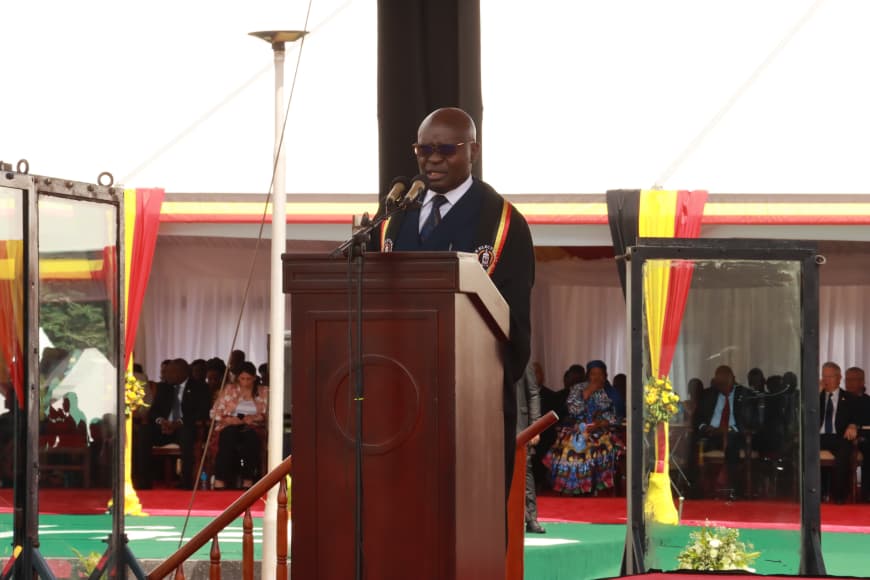
The Chairperson of the Electoral Commission of Uganda, Justice Simon Byabakama Mugenyi, said the Commission had fulfilled its constitutional mandate by organising and conducting presidential, parliamentary, and local government elections before the expiry of the government’s term of office.
“According to Article 105 of the Constitution, the person elected as President of Uganda shall hold office for a term of five years,” Justice Byabakama said. “Having been sworn in on 12th May 2021, the term of office expired today.”
He announced that the Electoral Commission successfully conducted the presidential election on 15 January 2026 and declared results within the legally required timeframe. Justice Byabakama emphasised that all legal procedures regarding the handling and transmission of election results from polling stations to the national tally centre were strictly followed.
“Let me unequivocally state here that the Commission complied with all the requirements of the law regarding the handling of results,” he said.
He further declared that President Yoweri Kaguta Museveni had met the constitutional threshold required to be declared winner of the election.
“A candidate shall not be declared elected as President unless the number of votes cast in favour of that candidate is more than 50 per cent of the valid votes cast,” he explained. He added that Museveni secured 71.6 per cent, “well over the 50 per cent threshold”, and was therefore duly elected President of the Republic of Uganda.
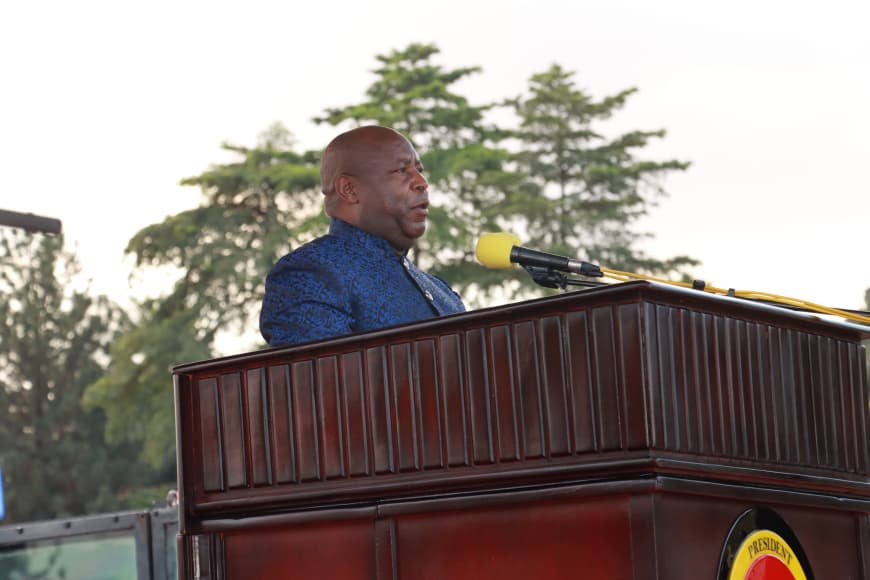
AU Chair and Regional Leaders
The Chairperson of the African Union and President of Burundi, H.E. Evariste Ndayishimiye, said the event symbolised the peace, stability and prosperity Uganda has had under the stewardship of President Museveni. He added that he acknowledges the transformation in Uganda and the promising economy. “The Burundian people will always remember you for the peace, unity and cooperation you have agitated for across Africa,” he said, adding that dialogue, reconciliation and stability will always be key pillars for the development of Burundi.
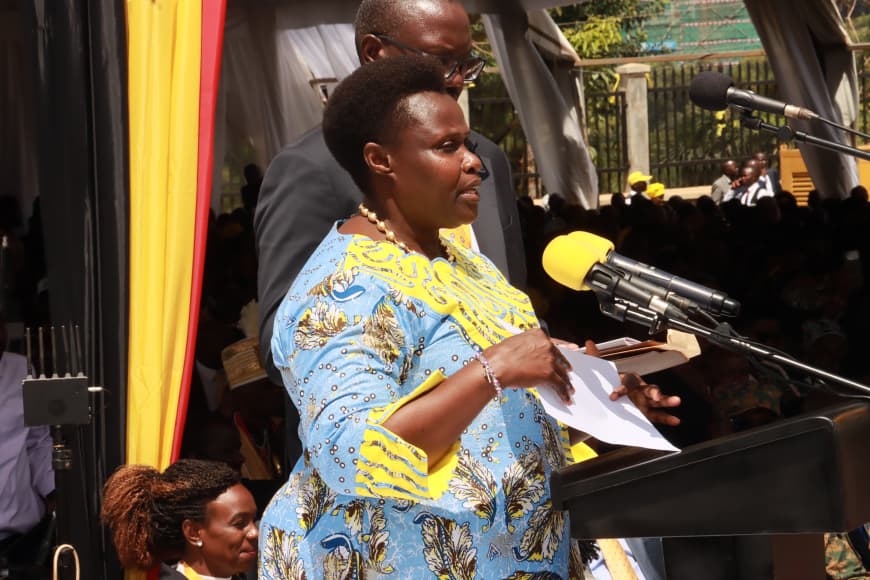
Vice President and Dignitaries
The Vice President of Uganda, H.E. Maj (Rtd) Jessica Alupo, who also served as Master of Ceremonies, congratulated the President and welcomed all Heads of State and visiting delegations to the historic occasion, saying the victory reflected the massive support the NRM enjoys across the country. “Your victory symbolises politics of interest. And I wish to thank all those who supported President Museveni during and after elections,” she noted.
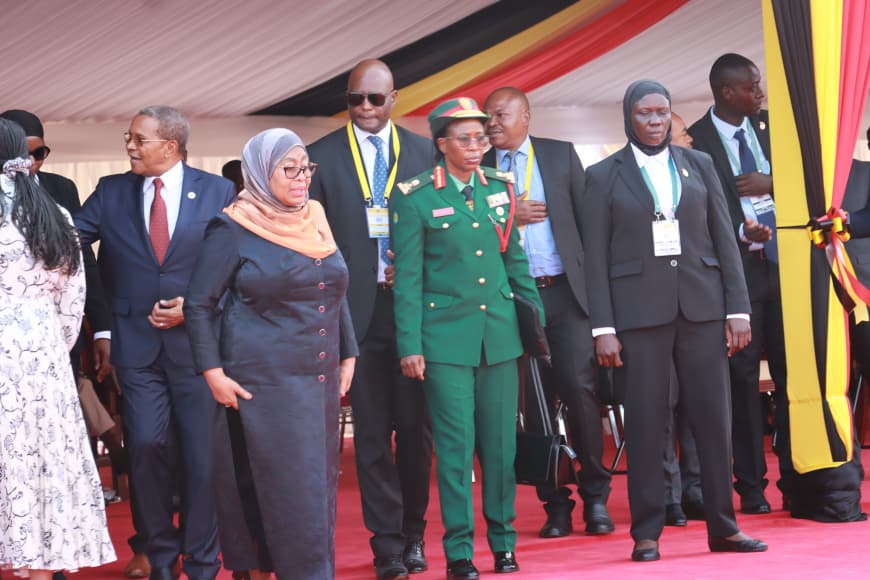
The ceremony was attended by President Daniel Chapo of Mozambique; President Evariste Ndayishimiye of Burundi; President Taye Atske Selassie of Ethiopia; President Felix Antoine Tshisekedi of the Democratic Republic of Congo; President Brahim Ghali of the Sahrawi Arab Democratic Republic; President Salva Kiir of South Sudan; President Hassan Sheikh Mohamud of Somalia; President Samia Suluhu Hassan of Tanzania; and the President of Togo, alongside heads of delegations from Algeria, China, Nigeria, Mali, Botswana, South Africa, Russia, Ghana, Japan, Angola and Saudi Arabia.
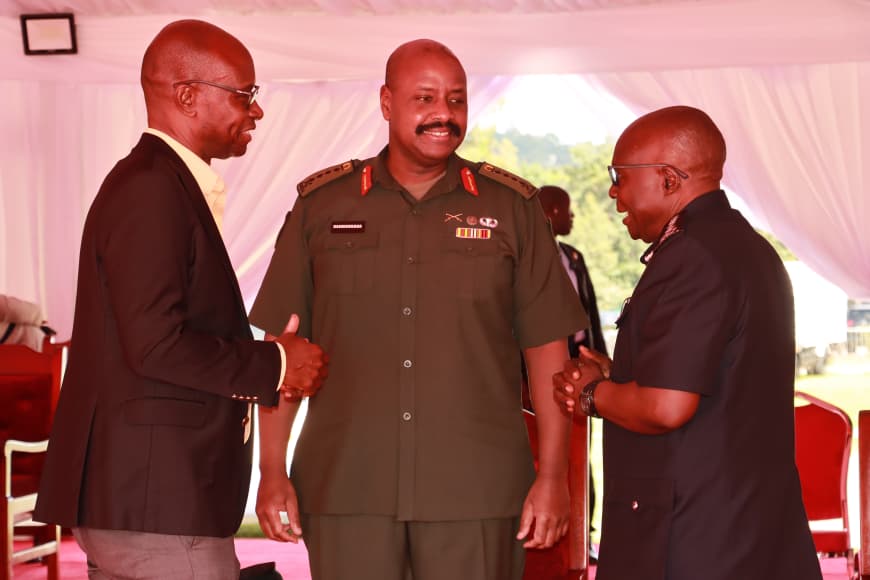
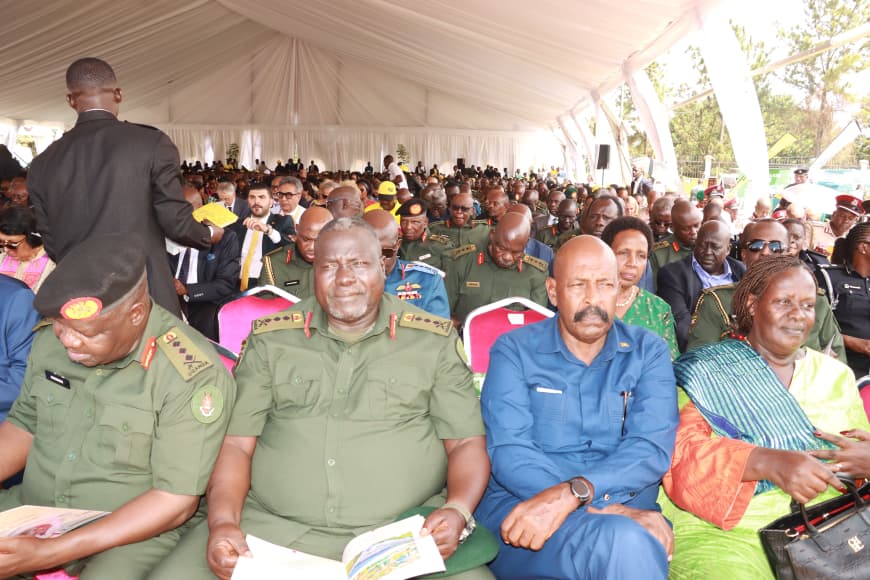
Also present were Prime Minister Robinah Nabbanja; Speaker of Parliament Rt Hon Annet Anita Among; diplomats; ministers; security personnel; and cultural and religious leaders, among others.