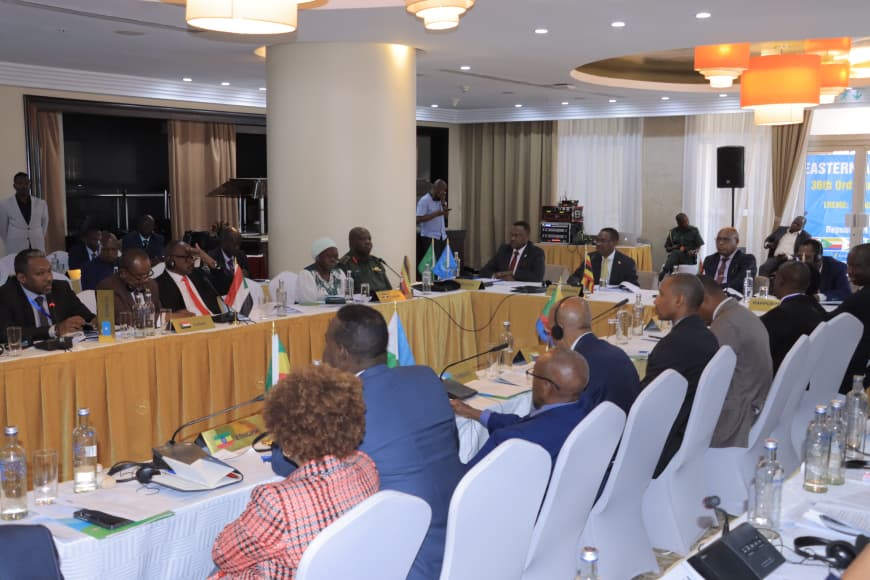
Eastern Africa member states have been urged to strengthen regional cooperation and collective security mechanisms amid a changing global security environment that is making it increasingly difficult for individual countries to confront emerging threats on their own.
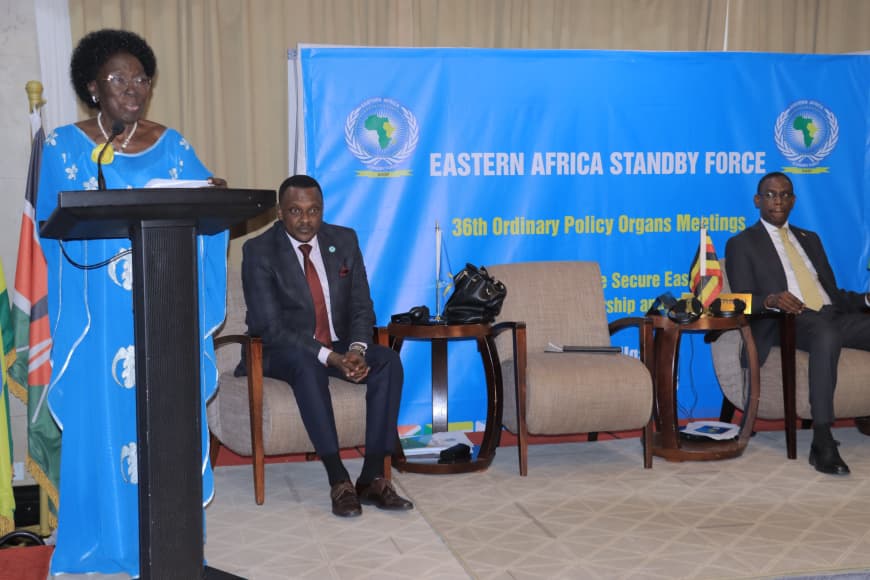 The call was made by Uganda’s First Deputy Prime Minister and Minister for East African Community Affairs, Rt. Hon. Rebecca Kadaga, during the 36th Ordinary Session of the Council of Ministers of Defence and Security of the Eastern Africa Standby Force (EASF) in Kampala.
Rt. Hon. Kadaga said the region was facing a complex security environment characterised by armed conflicts, displacement, technological advances, disrupted trade routes and growing humanitarian pressures.
“Peace cannot be sustained in a country alone. It cannot be secured in isolation. Lasting peace is achieved by co-leadership,” she said.
She urged member states to invest in peace and security mechanisms before crises escalate, describing EASF as an important expression of collective responsibility whose development over the years had strengthened the region’s capacity to respond to conflicts, support political solutions and promote stability.
“Every investment we make in peace and security is an investment in Africa’s future,” she said.
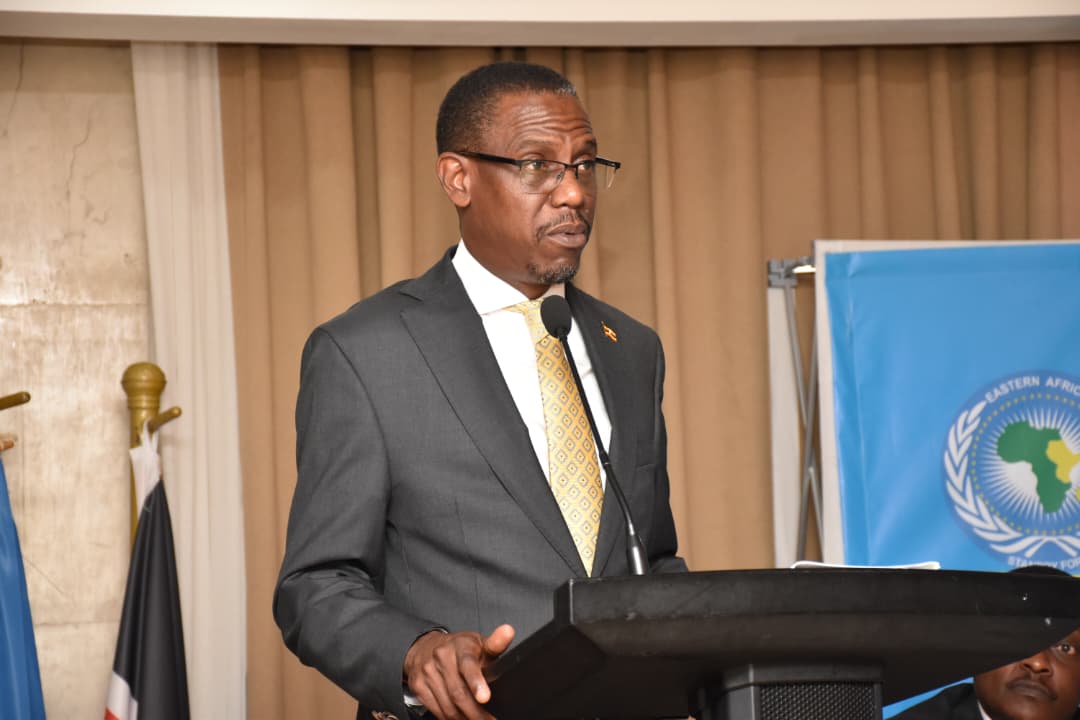 Uganda’s Minister of Defence and Veteran Affairs and Chairperson of the Council of Ministers, Hon Kiryowa Kiwanuka, challenged member states to translate political commitments into practical action.
Kiwanuka said the region was also confronting violent extremism, maritime insecurity, cyber threats, humanitarian crises and climate-related instability, requiring EASF to strengthen its ability to respond rapidly when called upon.
“Our challenge today is to move from readiness to rapid response,” he said.
He called for stronger joint planning, information sharing, interoperability and predictable financing to maintain the force’s operational readiness.
Hon. Kiwanuka also urged member states to make better use of existing regional capabilities rather than establishing similar facilities in different countries.
“Duplication weakens us. Specialisation strengthens us,” he said, calling for greater cooperation among centres of excellence in peace support operations, humanitarian assistance, disaster management and specialised training.
He encouraged member states to fulfil their commitments, linking adequate resources to the force’s ability to execute its mandate.
“Readiness without resources is rhetoric. Let us merge our mandates with money,” he said.
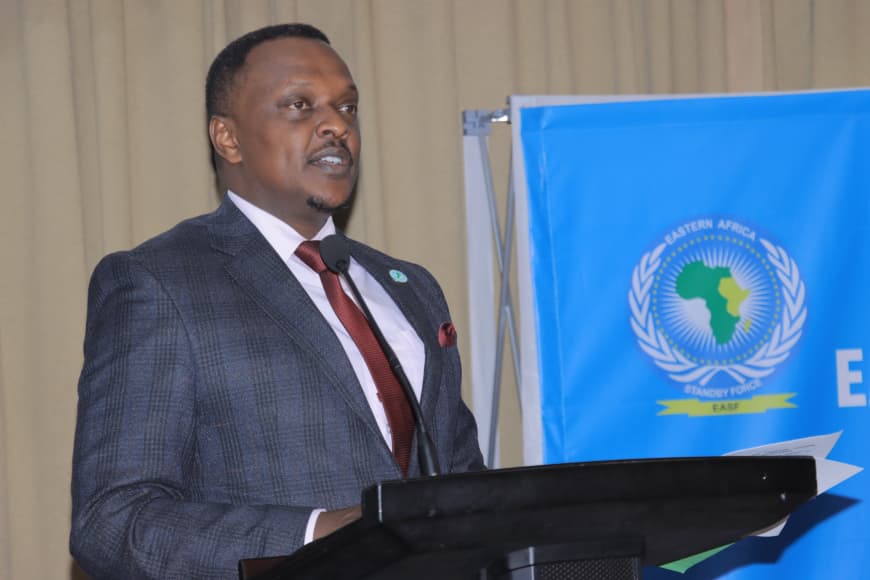 EASF Director, Brigadier General Ronald Rwivanga said the force’s effectiveness and future development would depend on sustained political support from member states.
“History has shown that institutions succeed not only because of their structures and personnel, but also because of political will. Your guidance, decisions and continued support will determine whether EASF remains at its current level or evolves into a fully capable and trusted regional organisation that delivers on the aspirations of its member states and the African Union,” Brig Gen Rwivanga said.
He observed that the gradual reduction of international support for African peace operations made greater African ownership of financing and sustaining them necessary.
“The question before us is no longer whether EASF can rely on external support. The question is how quickly we can position ourselves to assume greater responsibility when called upon by the African Union and our member states,” he said.
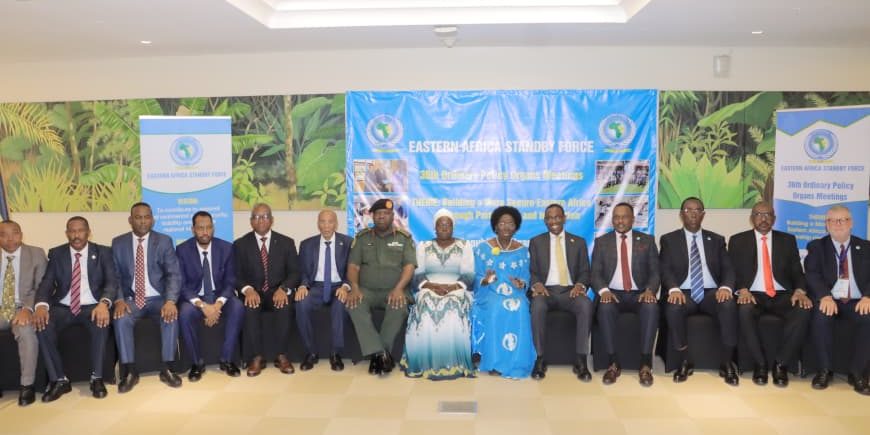
The meeting brought together representatives from EASF member states, including Burundi, Comoros, Djibouti, Ethiopia, Kenya, Rwanda, Somalia and Sudan.
Among those in attendance were Djibouti’s Minister of Defence, Mr Omar Abdi Said; Rwanda’s Minister of Defence, Hon Juvenal Marizamunda; Somalia’s Deputy Minister of Defence, H.E. Idris Osman Haji Ali; and senior military representatives from other member states.