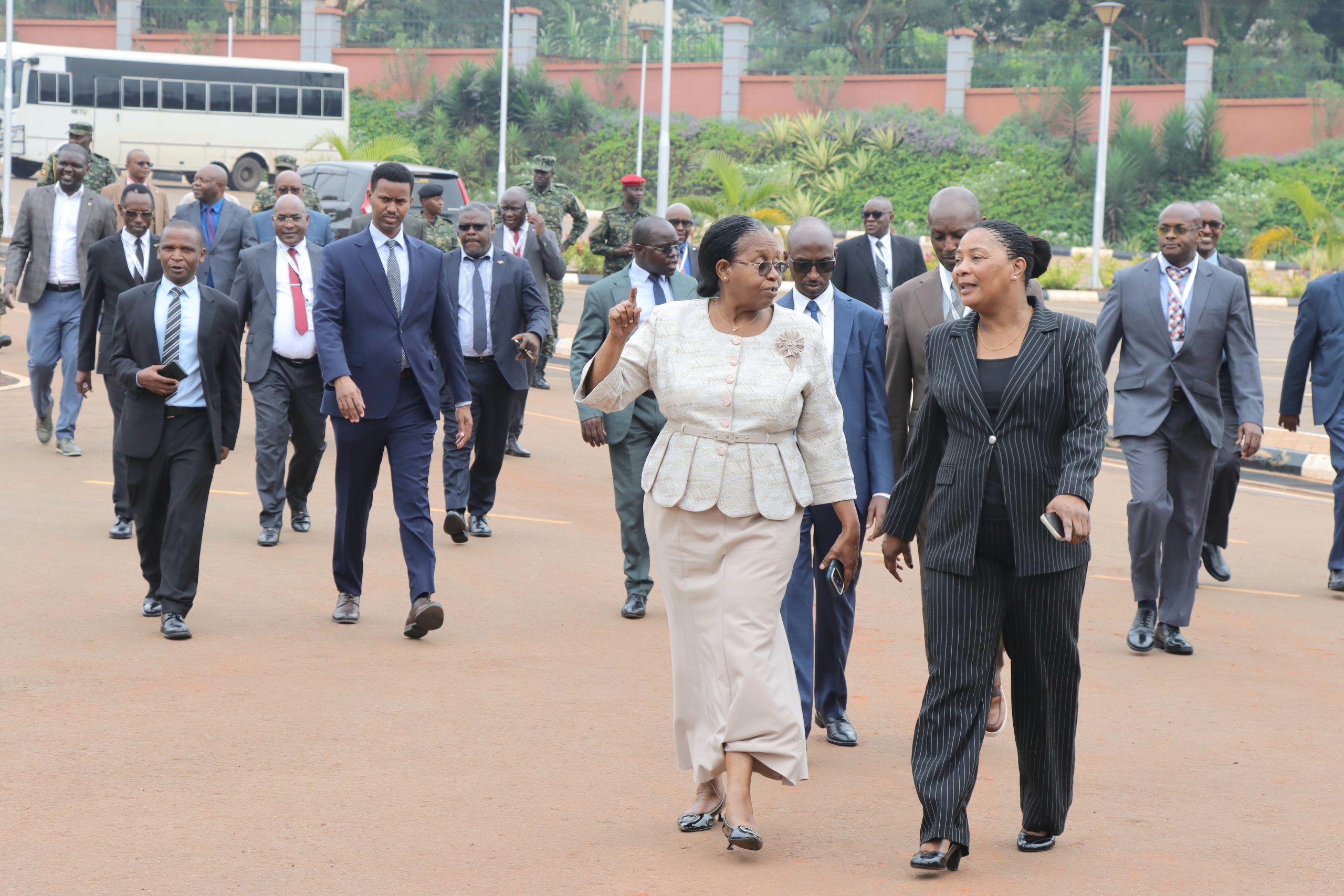
 East African Community (EAC) member states have been urged to strengthen cooperation among their military health services through joint preparedness, resource sharing and coordinated deployment of medical teams to improve the region’s response to public health emergencies.
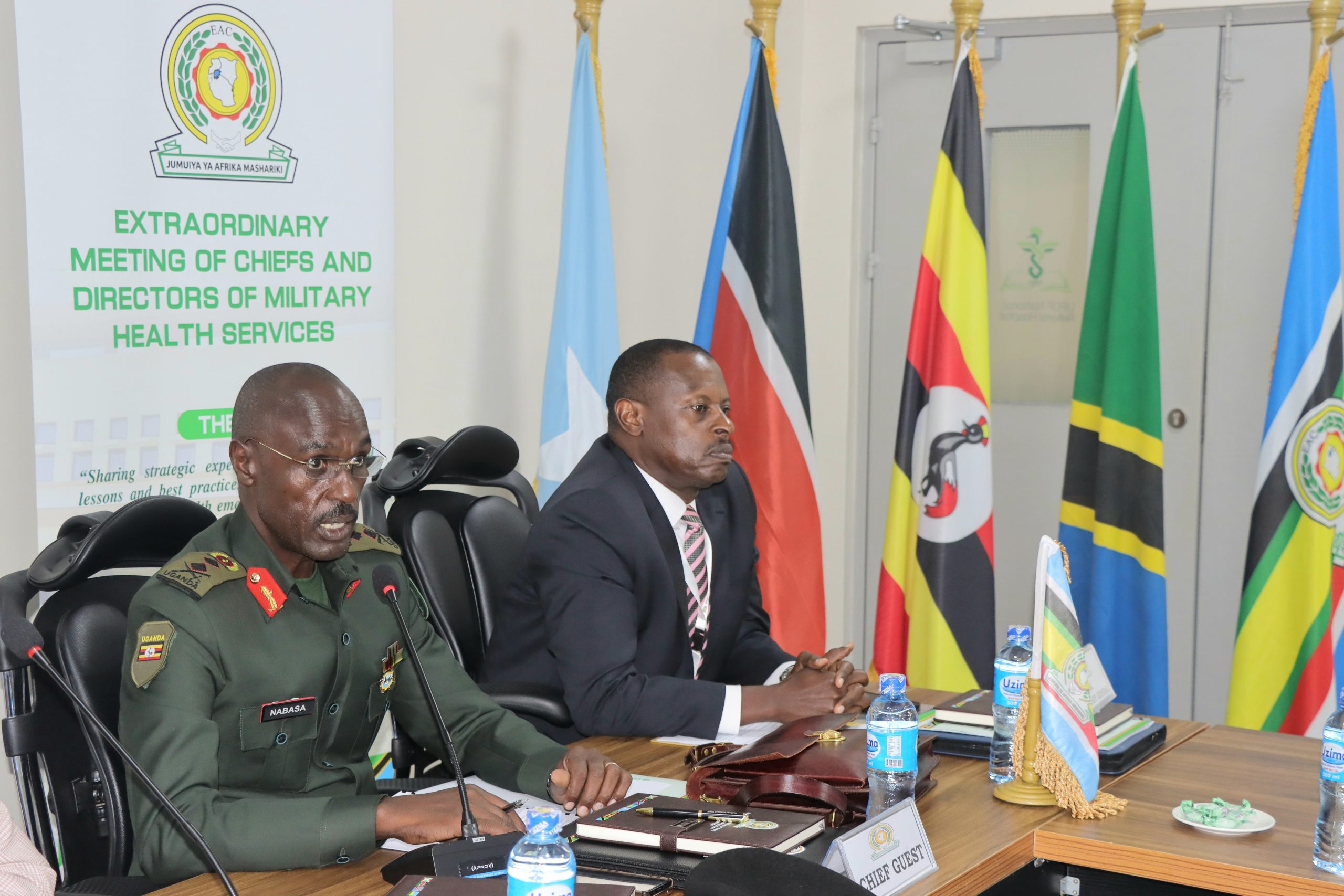
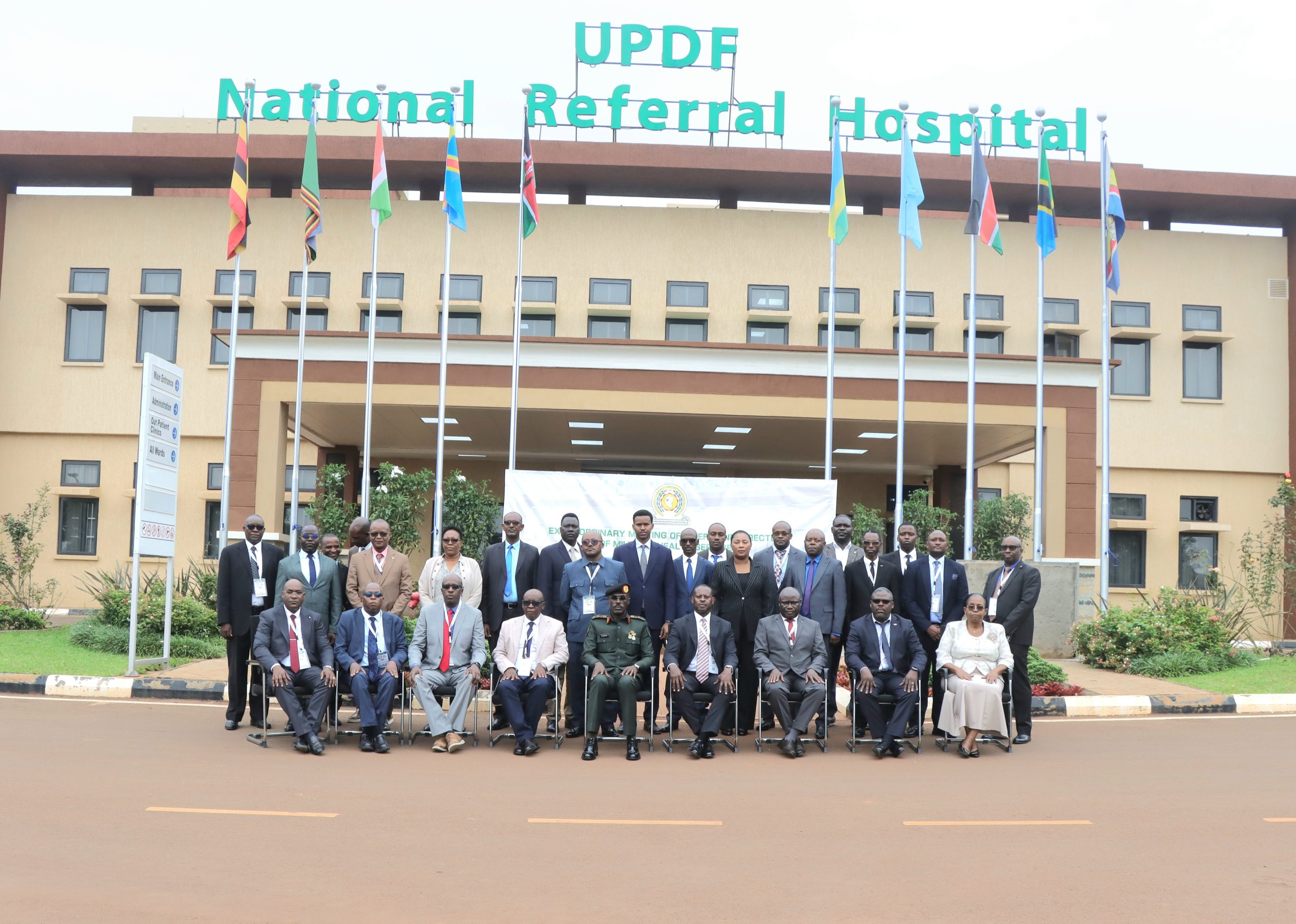
The call was made by the Uganda Peoples’ Defence Forces (UPDF) Joint Staff Policy and Strategy, Major General Don Nabasa, while opening the extraordinary meeting of Chiefs and Directors of Military Health Services from EAC member states in Kampala, under the theme: “Sharing strategic experiences, past operational lessons and best practices in response to public health emergencies.”
Maj Gen Nabasa challenged regional military health leaders to move beyond individual national preparedness and adopt a coordinated regional approach, noting that infectious disease outbreaks do not respect national borders.
“An outbreak that begins in one country can quickly become a regional concern. Our operations move across borders for trade, employment, family and other social activities. Our economies are interconnected. Our security interests are very similar,” he said.
He said the meeting provides an opportunity for military health leaders to explore how existing defence capabilities can be organised and deployed collectively to support national and regional responses to disease outbreaks and other health emergencies.
Maj Gen Nabasa observed that public health emergencies should no longer be treated as the sole responsibility of health ministries and civilian institutions, given their wider implications for national security, regional stability and economic activity.
He cited Uganda’s experience in responding to major public health emergencies, including Ebola outbreaks and COVID-19, noting that these experiences had demonstrated the importance of combining civilian medical expertise with military operational capabilities.
“These experiences have taught us that the success of an emergency response depends not only on the availability of medical experts, but also on the ability to organise people, provide resources, move rapidly, maintain discipline, connect different institutions and sustain operations under different circumstances. These are capabilities that our armed forces understand very well,” he said.
He emphasised that military involvement should complement, rather than replace, civilian-led public health systems, adding that armed forces possess operational resources that can help address critical gaps during emergencies.
Maj Gen Nabasa noted that EAC member states already possess considerable military health capabilities, including hospitals, medical personnel, laboratories, transport assets, engineering capabilities, communication systems and logistics infrastructure, which could be better coordinated for regional benefit.
He proposed establishing regional mechanisms for sharing specialised medical expertise and accessing resources, particularly during public health emergencies.
He further stressed the need to translate the meeting’s deliberations into sustained regional cooperation through regular assessments of preparedness, identification of capability gaps and coordinated interventions.
“Let us use this meeting to move from goodwill to practical cooperation. From sharing experiences to sharing capabilities. From individual national preparedness to a stronger regional system,” he said.
He added that protecting populations from major health emergencies was a shared responsibility, noting that epidemics could disrupt institutions, constrain economic activity and undermine regional stability.
“One of the most important lessons is that no single institution possesses all the capabilities required to manage a major public health emergency. We achieve more when we bring our respective strengths together to create a synergy,” he said.
The two-day meeting is expected to focus on five priority areas: developing a regional inventory of military health capabilities; establishing a framework for sharing and accessing resources; strengthening joint preparedness and response readiness; exploring regional standby arrangements to support public health emergencies; and establishing a sustainable mechanism for military health cooperation.
The meeting brought together representatives from Uganda, Kenya, Rwanda, Tanzania, Somalia, Burundi and South Sudan.